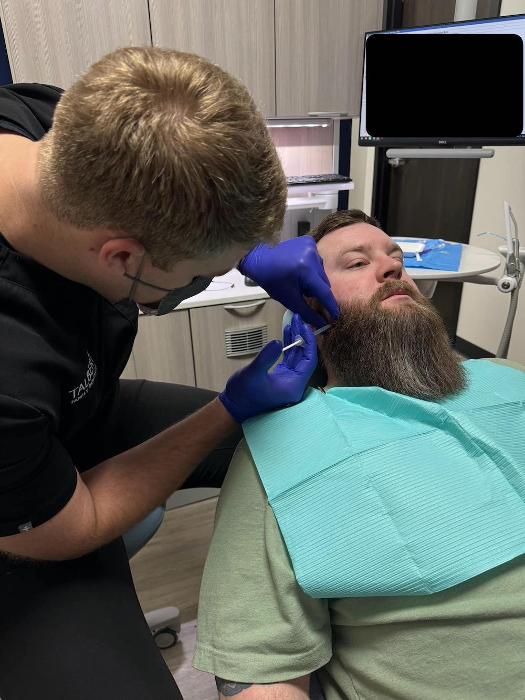
 Living with chronic jaw pain, morning headaches, or the constant worry about teeth grinding can be exhausting. At Talbert Family Dentistry, we understand the complex nature of TMJ disorders and bruxism. We can help you find long-term relief with treatment approaches tailored to your specific needs.
What Is TMJ?
TMJ isn't a condition; it's the name of the temporomandibular joint, which is the complex joint that connects your lower jaw to your skull. These joints work like hinges, allowing the range of movement to open and close your mouth, chew, speak, and yawn. Within each TMJ is a small disc that cushions the joint and helps it move smoothly.
When these joints become damaged, inflamed, or misaligned due to injury, arthritis, teeth grinding, or jaw clenching, it leads to a condition called temporomandibular disorder (TMD). This disorder can cause a cascade of painful symptoms that affect your jaw, head, neck, and even shoulders.
Symptoms of TMJ Disorder
TMJ disorders have various symptoms that may seem unrelated but are connected to jaw joint dysfunction:
- Jaw pain or tenderness
- Clicking, popping, or grinding sounds when opening or closing your mouth
- Jaws that "lock" in the open or closed position
- Chronic headaches or migraines
- Earaches or ringing in the ears (tinnitus)
- Neck and shoulder pain
- Facial pain or swelling
- Worn, chipped, or cracked teeth
- Morning jaw stiffness